
The ROI of Rolling the Dice: A Guide to Engineering Your Own Luck

Let's be honest: meritocracy is a great fairy tale we tell ourselves so we don't have to admit that the difference between a Unicorn and a "Chapter 11" is often just a well-timed tweet or a server not crashing during a Demo Day.
Success is luck. Period. But here's the kicker—luck isn't a lightning strike; it's a numbers game. And if you're tech-savvy enough to optimize your SEO or your coffee-to-code ratio, you can absolutely optimize your "Luck Surface Area."
The Founder's Casino
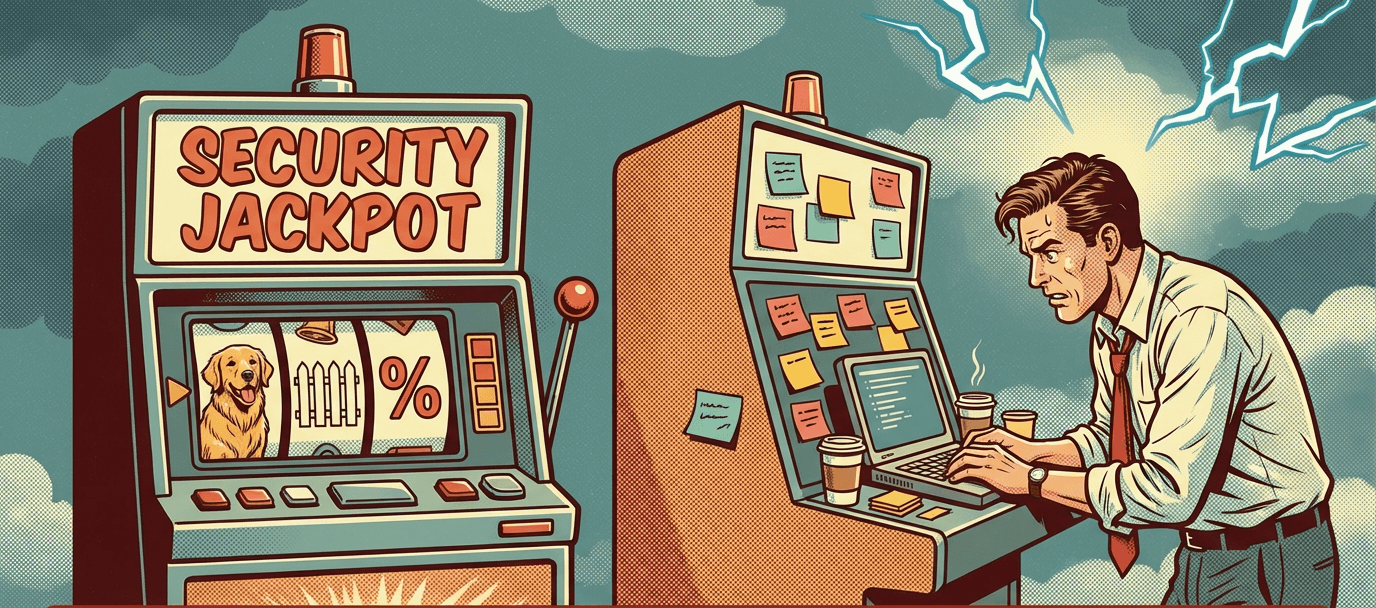
Think of life as a giant, weirdly lit casino. Most people enter and head straight for the low-stakes slots. They want the "Security Jackpot." It's a valid strategy: you put in your 40 hours, you pull the lever, and occasionally you win a Golden Retriever, a 2.5% mortgage rate, and a kid who looks 60% like you. That's a high-probability, low-volatility luck profile.
But then there are the Founders.
Founders walk into the casino, ignore the slots, and try to build their own blackjack table in the corner using nothing but VC money and a "disruptive" vision for how people buy socks. Is it riskier? Absolutely. But by starting a company, you aren't just waiting for luck; you're aggressively standing in the middle of a thunderstorm holding a 50-foot copper pole. Your chance of getting hit by "success-lightning" is mathematically higher simply because you've refused to go inside.
Defining Your Jackpot
The mistake we make in the "bubble" is thinking the only version of luck is a $100M exit and a profile in TechCrunch.
Luck isn't one-size-fits-all. A 40-hour week, a dog, and a mortgage can be someone's dream outcome — genuinely. The problem is playing a game you never signed up for and wondering why you're losing.
And unlike a real casino, the house doesn't always win here. The odds in life are genuinely broken — people succeed for stupid reasons, fail for unfair ones, and occasionally the universe just trips and drops something extraordinary at your feet. That's the chaos you're working with. It's not fair, but it's not rigged against you either.
- The Startup Version: Luck is your Series A lead investor having a "good feeling" about you because you both use the same obscure mechanical keyboard.
- The Lifestyle Version: Luck is finding a remote gig that pays Silicon Valley wages while you live in a village where the most expensive thing is an artisanal goat cheese.
If you don't want to build a SaaS for dog walkers, don't play that game. But remember: whatever "lucky" life you want—whether it's the quiet family life or the chaotic IPO life—you still have to buy the ticket.
The "Don't Be a Quitter" Multiplier
Here is where the "stoned math" actually checks out: The longer you stay at the table, the more likely the physics of probability are to break in your favor.
In the startup world, we call this "Runway." In life, we call it "Not giving up before the miracle happens." If you flip a coin once, luck is 50/50. If you flip it a thousand times, the odds of you getting a "lucky" streak of ten heads in a row becomes almost inevitable.
Most people leave the casino after three losing hands. The winners? They're the ones who figured out how to stay in the game long enough for the statistical anomalies to kick in.
The Summary for the Skimmers:
- Luck is a variable, not a constant. You can't control the wind, but you can definitely build a bigger sail.
- Pick your Jackpot. If you don't want the stress of a startup, don't optimize for startup luck. Optimize for "Dog and Backyard" luck.
- Persistence is just Probability in disguise. If you stay in the room long enough, someone is eventually going to drop a bag of money or a really great idea.
The takeaway? Stop trying to be "worthy" of success and start trying to be "available" for it.